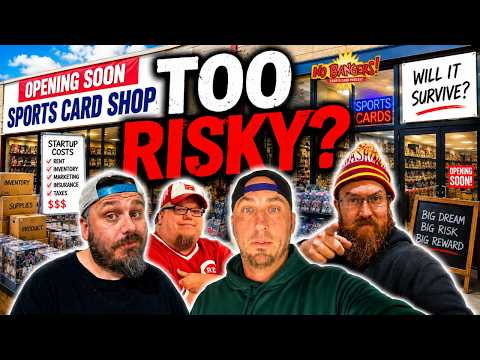
Video of the Day: Opening a Card Sports Card Shop in 2026 — Can It Actually Survive?
The brick-and-mortar card shop is one of the most romanticized businesses in the hobby. The image of the local shop — bins of commons, glass cases with vintage wax, the smell of cardboard and stale coffee — is practically a religious icon in collecting culture. But in 2026, can that business model actually survive?
This episode of the No Bangers! Sports Card Podcast takes an unflinching look at the real economics of opening a physical card shop today. The conversation covers the hard numbers: what it costs to lease retail space (anywhere from $3,000 to $15,000 a month in a decent location), how much inventory you need to open the doors, and what actually moves versus what sits. Spoiler: single cards don't pay the rent — sealed product and break services do.
The Three Threats
The No Bangers discussion surfaces three existential challenges facing card shops in 2026:
- PSA's grading backlog — With PSA pausing value-tier submissions and turn times stretching, the grading pipeline that drives so much of the singles market is bottlenecked. Shops that built their business model around submissions and crossovers are getting squeezed.
- Online marketplace dominance — eBay, Whatnot, and social media marketplaces have eaten the singles market. Why drive to a shop and pay retail when you can find the same card in a 30-second search? The shop's pricing power on singles has evaporated.
- Rising commercial real estate — Retail rents are climbing while foot traffic for hobby-specific stores has not recovered to pre-pandemic levels. The margin between a profitable month and a loss is thinner than ever.
What's Working
It's not all doom and gloom. The podcast highlights shops that are thriving by rethinking the model:
- Events and community — Shops that host regular trade nights, grading submission parties, and release-day events build recurring traffic that retail alone can't sustain.
- Break and sealed-product focus — Live and in-person breaks generate consistent revenue with better margins than singles. The shops that treat themselves as entertainment venues with a retail front are the ones growing.
- Grading service hubs — Being the local drop-off for PSA/SGC submissions creates sticky customers who return every few weeks.
And then there's the counter-argument. New shops are still opening — Card Lounge NJ and similar concepts show that demand for local card culture exists. The model has changed, not died. It's now a service business with a retail front, not a retail business with service add-ons.
The Verdict: The card shop isn't dead, but the romanticized version of it is. The shops that survive will look a lot more like community centers with a cash register than the dusty bins-and-glass-case shops of the 1990s.
Channel: No Bangers! Sports Card Podcast