PSA Value-Tier Grading Pause: 10M Card Backlog Forces Major Changes
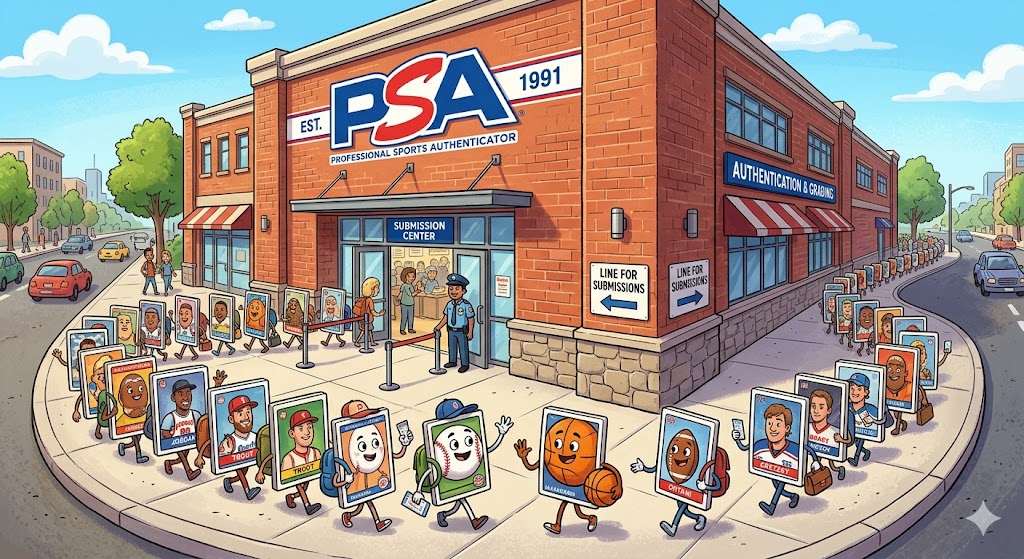
PSA's grading pipeline has hit a breaking point — 10 million cards deep, and collectors are paying the price.
The grading giant has confirmed it is pausing new Value-tier submissions amid a staggering backlog that now exceeds 10 million cards. Wait times have ballooned past 90 days for the most affordable entry point into professional grading, and the ripple effects are being felt from casual collectors to high-volume dealers.
The Numbers Behind the Gridlock
PSA's Value tier — the $19.99-per-card service level that handles the bulk of modern card submissions — is effectively at a standstill. Internal estimates confirm the company is sitting on a backlog of over 10 million cards, with turnaround times for Value submissions stretching to 90+ business days in many cases. This confirms reports from Yahoo Sports, Sports Illustrated, and The New York Times, all of which covered the grading backlog crisis on May 28, 2026.
The backlog is the direct result of an explosion in submissions driven by:
- Record-breaking new product releases flooding the market with ultra-modern cards needing grading
- Breaker culture — group breaks generate thousands of raw cards per session that all go to PSA
- Flipper economics — the spread between raw and PSA 10 prices makes grading a near-automatic decision for any modern hit
- PSA's own brand premium — PSA-graded cards consistently sell for 20-40% more than equivalent grades from competitors
The Two-Tier Market Emerges
The Value-tier pause is creating a de facto two-tier grading market. Dealers with premium accounts and bulk submission arrangements can still get cards graded through Express and Super Express tiers — at $75-$300 per card. The average collector sending in 5-10 cards a month is stuck waiting or paying multiples of what they used to.
The math breaks hard for mid-tier cards:
- A card worth $100 raw costs $75 to grade at Regular tier — that's 75% of the card's value
- Cards under $50 raw become uneconomical to grade at any tier above Value
- The population data gap widens: dealer-submitted stars get graded heavily while second-tier players see fewer submissions
Industry Fallout
The pause is reshaping every corner of the hobby. Retailers who built business models around quick PSA turnaround are scrambling. eBay sellers are sitting on ungraded inventory they can't list as authenticated. Break groups are facing delays that cascade into buyer dissatisfaction.
Competitors see an opening. SGC has accelerated its marketing push, Beckett's subgrades are attracting precision-focused collectors, and AI-driven grading services like TAG are positioning themselves as the speed alternative. But PSA's auction premium means most collectors will wait rather than switch — a dynamic that gives PSA little incentive to rush.
The $200 million expansion announced in 2025 was supposed to double grading capacity. Instead, submission volume has grown faster than the expansion can absorb. The bottleneck has moved from intake to grading to encapsulation, and every step of the chain is strained.
The verdict: PSA's Value-tier pause is not a glitch — it's a structural shift. Collectors who rely on affordable grading need to plan for a world where $20 grading may not return anytime soon.