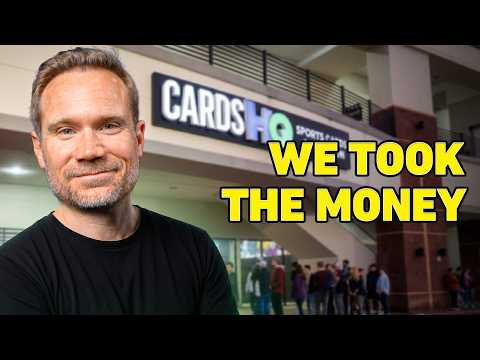
Video of the Day: The Brutal Reality of Scaling a Card Business — Why We Took a Major Investment
Behind every sports card you buy, there is a business — and that business is a lot harder to run than most collectors realize.
Geoff Wilson, one of the hobby's most transparent creator-entrepreneurs, opens the books on his sports card operation in this episode of The Geoff Wilson Show, explaining why even a successful card business needed outside investment capital to scale beyond a one-person shop. The video arrives at a moment when the blog has covered the consumer-facing side of the live selling revolution (CASE #0100, "The Live Selling Boom") — but what about the people actually selling the cards?
What the Video Reveals
Wilson doesn't just talk abstractly about the card business — he walks through the actual numbers. The margins (or lack thereof) in modern card dealing. The cost of inventory. The cash-flow realities that make it nearly impossible to grow organically past a certain point. The tension between moving volume at thin margins versus holding for premium prices with uncertain timeframes.
The video is essentially a case study in the structural transformation of the sports card retail economy. As the hobby has professionalized — with dedicated shipping departments, inventory management systems, and full-time staff — the economics have shifted from "buy low, sell high" to a volume-driven operation that looks more like traditional retail than the card shop of the 1990s.
The Macro Picture
Wilson's experience is not unique. Across the hobby, the same dynamic is playing out:
- The mom-and-pop era is ending. The basement flipper who buys a few boxes and sells singles on eBay is being squeezed by operations with warehousing, automated listing tools, and negotiated wholesale pricing.
- Investment capital is reshaping the market. When card businesses take outside investment, the math changes. The pressure to move volume, hit margins, and return on capital creates different incentives than the collector-entrepreneur who can afford to hold a card for the right buyer.
- Platform dependency. Whether it's Whatnot, eBay Live, or a dedicated web store, card sellers are increasingly dependent on platforms that take a cut and control the customer relationship. The platforms have the leverage, and the sellers bear the risk.
What This Means for Collectors
The professionalization of card dealing has real consequences for collectors. On one hand, better operations mean faster shipping, better customer service, and more inventory to choose from. On the other hand, as the cost of entry rises for sellers, there are fewer small operators competing — and the ones who remain are playing a different game than the collector-dealer of the past.
The question the blog has been circling since the Live Selling Boom article is this: as the sports card industry enters its institutional-investment phase, what happens to the hobby that built it? The answer is not yet clear, but Wilson's willingness to show the math — the real math, with all the unglamorous details — is a valuable contribution to the conversation.
Verdict: The Geoff Wilson Show's look inside the economics of scaling a card business is essential viewing for anyone who buys, sells, or collects sports cards. The hobby is changing, and understanding the business realities behind the cards is the first step to understanding where the market is headed.
Channel: The Geoff Wilson Show