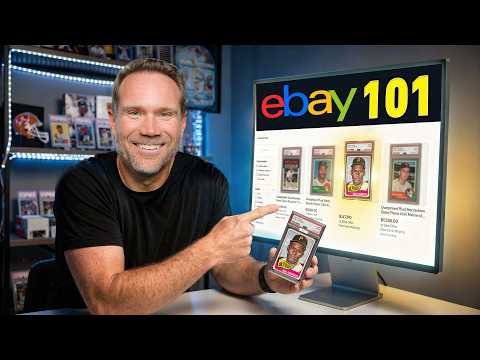
Video of the Day: The Secret to Finding Sports Card Steals on eBay
Today's Video of the Day puts the eBay search box under interrogation. Sports Card Investor's "The Secret to Finding Sports Card Steals on eBay" is timely because the hobby is not short on price data anymore. It is short on disciplined ways to turn that data into better buying decisions.
Why This One Fits Today
The market is giving collectors two conflicting signals at the same time. High-end baseball comps are still printing eye-catching numbers, but most buyers are not shopping in six-figure Hank Aaron territory. The practical question is simpler: where can a normal collector still find mispriced cardboard?
That is where eBay remains the hobby's biggest evidence locker. It has massive liquidity, inconsistent seller behavior, uneven photography, odd titles, forgotten ending times, and enough duplicate listings to reward patient search work. A polished marketplace does not eliminate inefficiency; it just hides it behind more filters.
The Real Strategy Is Specificity
The useful way to think about eBay is not "cheap cards." It is mismatch detection. Look for places where the seller's title, category, photo, or description does not match how serious buyers search. That can mean a missing parallel name, a misspelled player, an abbreviated set, a poorly labeled insert, or a listing that says "refractor" when the exact market wants a more precise phrase.
Completed-sale research matters before the bid button. An asking price is just a wish. A sold comp is evidence. The best eBay buyers are not guessing whether a card is undervalued; they are comparing the listing against recent confirmed transactions and asking whether the gap is real after fees, shipping, taxes, condition risk, and grading uncertainty.
Where Buyers Get Trapped
There are also plenty of false positives. A blurry photo may hide damage. A raw card priced below PSA 9 comps is not automatically a grading candidate. A "rare" title may describe a card that has hundreds of near-identical variations. A low auction price with high shipping can still be a bad buy.
The cleanest steals usually have boring explanations: bad timing, weak title, wrong category, seller with low hobby vocabulary, or a card that sits between collecting niches. The worst buys usually require heroic assumptions.
The Verdict
CASE #0129 verdict: eBay still rewards collectors who search like detectives instead of shoppers. The edge is not speed alone. It is knowing the card, knowing the comp, and knowing which listing errors actually matter.
Channel: Sports Card Investor