2026 Topps Series 2 Baseball Launches — Vintage Buyback Program Bridges Modern Wax and Grail Cards
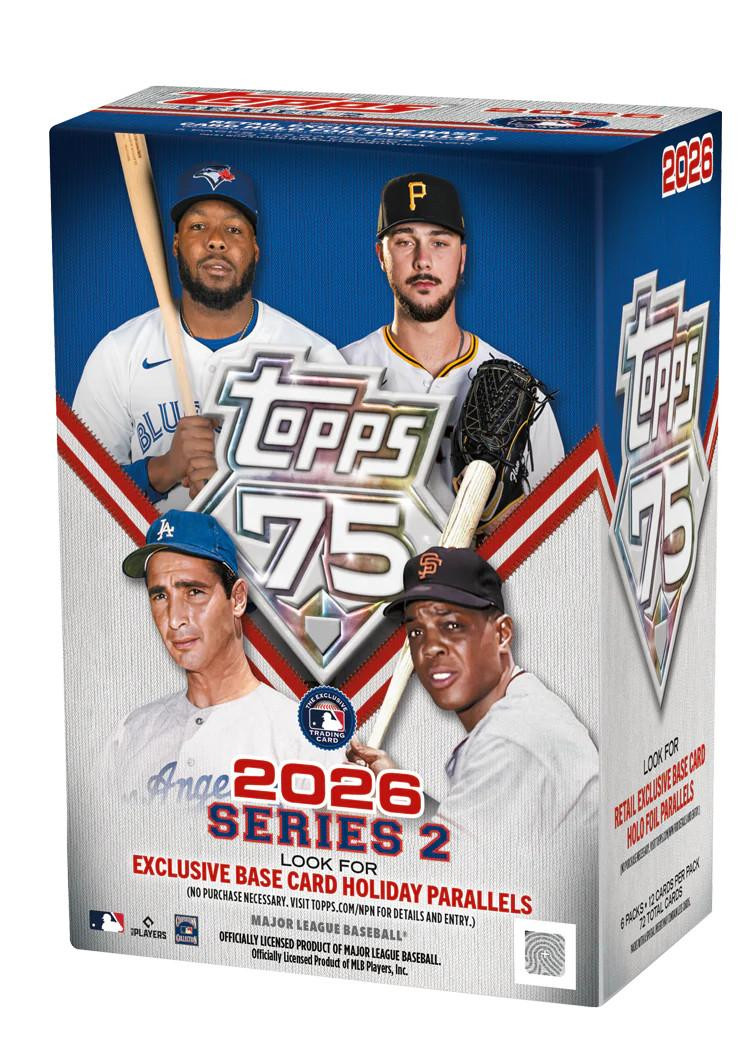
The first boxes of 2026 Topps Series 2 Baseball have reached hobby shops and breakers this week, and this year's release comes with something no flagship Topps set has ever attempted: a buyback redemption program that puts actual graded vintage cards inside modern wax. It is the most direct bridge between the modern unopened market and the vintage graded market that Topps has ever built, and it arrives at a moment when the hobby is actively questioning where its money should go.
The Buyback Revolution
Tucked inside select packs of 2026 Topps Series 2 are sealed redemption cards — not parallels, not inserts, not autograph vouchers, but direct-exchange certificates for graded vintage cards. The program's centerpiece is a 1952 Topps Mickey Mantle #311 that PSA graded while it was listed on Goldin Auctions, creating a meta moment where the grade itself was revealed during the auction process. But the buyback pool extends well beyond Mantle: 1915 Cracker Jack, T206 Wagner, and other pre-war and post-war grails are in circulation, randomly seeded into hobby, jumbo, blaster, and hanger packs.
The mechanics are straightforward. A collector who pulls a buyback redemption card enters a code on Topps' website and receives a shipped graded vintage card. The vintage card inside the redemption is determined at the time of the pull — the redemption card itself does not disclose which vintage card it holds, meaning every buyback pull carries the potential for a life-changing piece of cardboard. This is not an insert set or a parallel chase. It is a direct pipeline from modern wax to the graded vintage market, and it fundamentally changes the value proposition of opening a box of Series 2.
The 1952 Mantle Redemption
The most publicized buyback card is the 1952 Topps Mickey Mantle #311 that PSA graded during its Goldin auction listing. This created an unusual dynamic: bidders could see the PSA grade in real time while the auction was active, effectively knowing the condition of a redemption card that most collectors would pull blind. The Mantle, graded PSA 3 (VG), sold for a significant premium, and its journey from a modern pack to a Goldin auction block serves as the program's proof of concept. If a PSA 3 '52 Mantle can come out of a 2026 Series 2 box, any card in the buyback pool is theoretically pullable.
The 2026 Rookie Class
While the buyback program has captured the headlines, Series 2 also carries the year's second flagship rookie class. The 2026 MLB Draft's top prospects headline the set, along with breakout young stars who debuted after Series 1's cutoff. Topps has loaded the set with multiple rookie card variations — base, chrome, rainbow foil, and the usual parade of numbered parallels — giving the modern side of the product its own chase appeal. Early box breaks suggest the autograph checklist is heavier on on-card signatures than recent releases, a welcome shift for collectors who have grown weary of sticker autos on premium products.
The PSA Pause Connection
The buyback program lands at a particularly interesting moment. With PSA's value-tier grading on hold (covered in CASE #0084), collectors are making decisions about where to allocate their hobby dollars. The choice between buying raw wax and buying raw singles has never been more stark: wax offers the lottery ticket of a buyback redemption that could yield a five-figure vintage card, while singles offer known condition and immediate graded inventory. Topps is betting that enough collectors will choose the lottery ticket to make Series 2 a commercial success, and the early data from breakers suggests that bet may pay off.
Format Breakdown
Early reports from breakers and hobby shops suggest the buyback redemption hit rate varies by format. Hobby and jumbo boxes appear to carry the highest concentration of redemption cards, while blasters and hangers offer a lower-cost entry point for the lottery. Topps has not published official odds for buyback redemptions, but the initial box-break data suggests approximately one redemption per case of hobby boxes, making them genuinely scarce rather than a participation trophy.
The set's anniversary insert series also returns, paying tribute to past Topps designs. While these inserts rarely carry long-term value, they provide a nostalgic through-line that connects Series 2 to the broader Topps design lineage — a design echo that complements the buyback program's literal connection to vintage cardboard.
Market Implications
The long-term impact of the buyback program depends on how Topps evolves it. If Series 2 is a one-off experiment, the redemptions become collectible curiosities. If Topps integrates buyback redemptions as a recurring feature — and the early buzz suggests strong consumer reception — the program could fundamentally alter how collectors evaluate flagship product. A box of Topps Series 2 that might contain a T206 Wagner is not competing with other 2026 releases; it is competing with a lottery ticket, and that comparison changes the math entirely.
For the vintage market, the program introduces an unusual dynamic: graded vintage cards are being removed from the market through buyback redemptions and re-circulated into the hands of collectors who opened modern wax. This does not meaningfully affect the overall population of high-grade vintage (the redemptions are too few), but it creates a psychological connection between the act of ripping a pack and the act of owning a piece of baseball history that no Topps release has managed before.
Verdict: 2026 Topps Series 2 is not just another flagship release. The buyback redemption program represents the most significant product innovation Topps has attempted in years, and it arrives at a moment when the hobby is eager for a reason to believe in the connection between modern wax and the vintage grails that define the market. Whether the program becomes a recurring feature or a one-year experiment, it has already changed the conversation around what a box of Topps Baseball can contain.