A $2.2 Million Black Lotus Was Only Third in an $11.3 Million TCG Week — and Heritage Moved an Illustrator for $5 Million
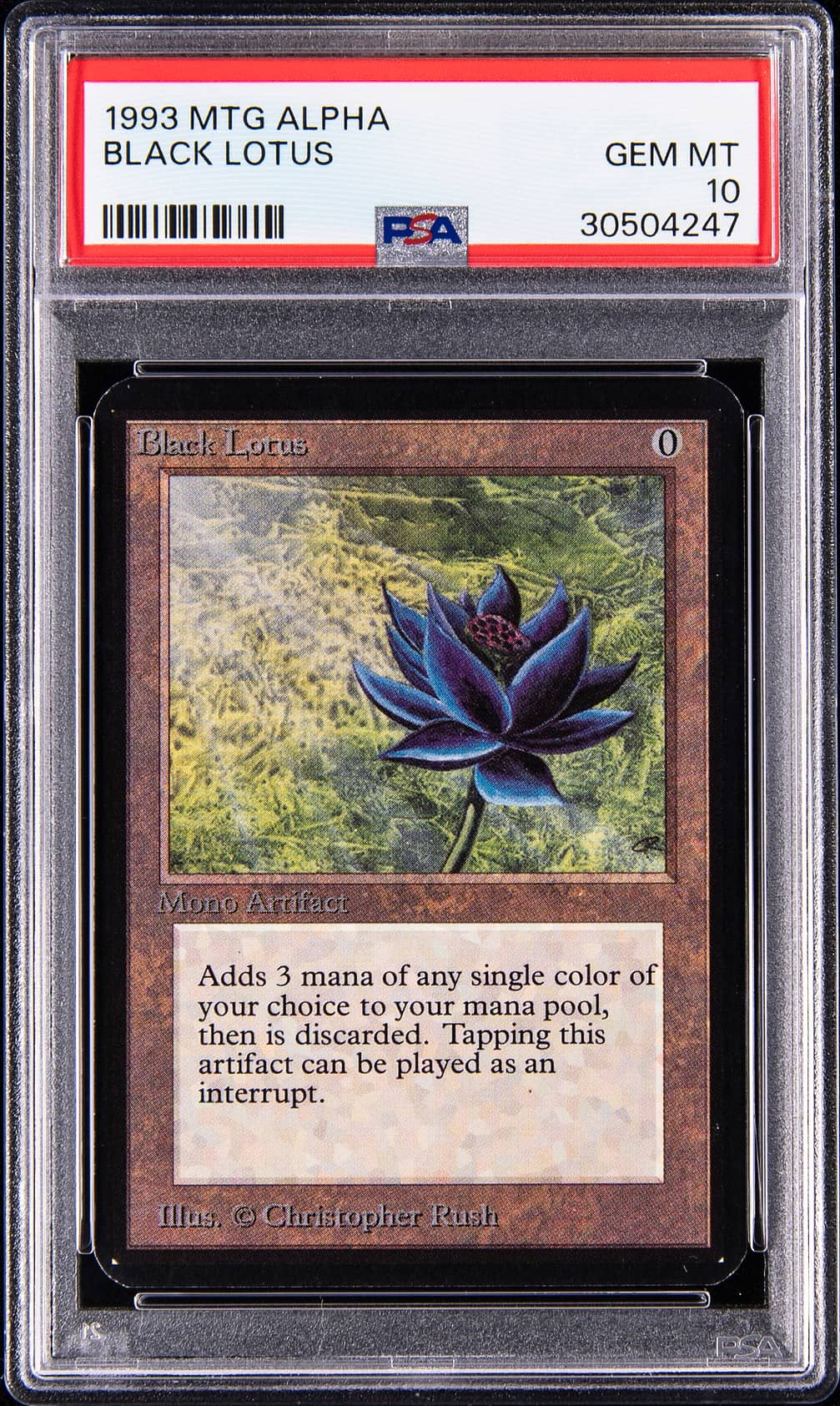
A 1993 Magic: The Gathering Alpha Black Lotus in a PSA Gem Mint 10 holder sold for $2,208,200 on September 19. It was the third-biggest publicly tracked trading card game sale of the week.
Sports Illustrated's Lucas Mast, working from Card Ladder sales data, put the five largest publicly tracked TCG sales from September 13 to 20 at $11,339,471 — more than five times the previous week's top-five total of roughly $2.2 million. Every one of the five cleared $500,000, which SI describes as a first "in recent memory." Pokémon took four of the five places.
The Week, In Order
- $5,000,000 — Pokémon Pikachu Illustrator Unnumbered Promo CoroCoro Comics, PSA 9, Heritage, September 18
- $2,806,271 — 1998 Pokémon Japanese CoroCoro Comic Promo Holo Illustrator Pikachu, CGC 9, Goldin, September 19
- $2,208,200 — 1993 Magic: The Gathering Limited Edition Alpha Black Lotus, PSA 10, Goldin, September 19
- $750,000 — sealed 1999 Pokémon 1st Edition Base Set booster box, Heritage, September 18
- $575,000 — 2002 Pokémon Legendary Collection Charizard Reverse Holo #3, PSA 10, Heritage, September 18
What PSA's Own Database Says About the Lotus
ICv2's Jeffrey Dohm-Sanchez reported the Goldin result on September 20 and scoped it carefully: a record auction price for this card type, but short of the $3 million private sale of a CGC Pristine 10 Alpha Black Lotus in 2024. ICv2 also states the card is one of three PSA Gem Mint 10 Alpha Black Lotuses currently in existence.
That last claim checks out at the source. The slab in Goldin's image carries cert number 30504247, and PSA's certificate lookup for that number returns 1993 MAGIC THE GATHERING LIMITED EDITION ALPHA BLACK LOTUS, item grade GEM MT 10, PSA Population 3, PSA Pop Higher 0. PSA's sales history against that same cert logs the $2,208,200 Goldin result. The card pictured is the card that sold, and it sits in a group of three with nothing graded above it.
The card underneath the label is the original printing: a mana cost of zero, a type line reading "Mono Artifact" rather than the plain "Artifact" of later releases, rules text that still calls the effect an interrupt, and Christopher Rush's illustration credited along the bottom edge.
Heritage Highlighted a $1.41 Million Illustrator in July. In September It Sold One for $5 Million.
CASE #0159 covered Heritage Auctions' record first half of 2026, a $1.41 billion six-month total, and listed the individual results Heritage put forward alongside it. One line in that list was a Pikachu Illustrator card at $1.41 million.
Ten weeks later, on September 18, Heritage sold a PSA 9 Pikachu Illustrator for $5 million — more than three times the figure the same house had highlighted from its own record half-year.
Analysis: These are two results, not a trend line, and the July number was one sale Heritage chose to feature rather than a ceiling it published. What can be said is narrow and still striking: same auction house, same card, ten weeks apart, and a multiple of more than three between them. Neither outlet accounts for the gap, and the sales data does not explain it either.
Two Nines, One Day Apart, $2,193,729 Between Them
The pair of Illustrators is the week's other story. otia.com, reporting the same results on September 20, treats the CGC 9 as a second copy of the same card and notes that the PSA 9 brought nearly $2.2 million more. The exact difference between the two published figures is $2,193,729, on sales a day apart.
ICv2 supplies the one sourced reading of why: PSA-graded Gem Mint cards, it writes, tend to hold a premium at auction over comparable cards graded Gem Mint or Pristine by other services. otia's own explanation — condition, holder preference, presentation and buyer confidence — is that outlet's analysis rather than a measurement, and it is not adopted here.
CASE #0328 looked at how PSA, BGS, CGC and SGC describe their own top grades. This week the market put prices on two of those companies' nines, on copies of the same card, and the distance between them was seven figures.
The Box and the Floor
Fourth place was a sealed 1999 Pokémon 1st Edition Base Set booster box at $750,000 through Heritage. Both SI and otia put 36 unopened packs inside it. CASE #0296 gave the population behind the pull those packs are chased for: as of August 31, PSA had straight-graded 5,375 copies of the 1999 1st Edition Charizard, and 123 of them had come back Gem Mint 10.
Fifth was a 2002 Legendary Collection Charizard Reverse Holo #3 in a PSA 10 at $575,000. In most weeks a figure like that leads the TCG market. This week it was the floor.
A $2.2 million Black Lotus finishing third is the cleanest measure of what the top of this market did between September 13 and 20. The $5 million Illustrator is the number that will get argued about.
Confidence note: Sale prices, dates, auction houses and the weekly total are as reported by Sports Illustrated (Lucas Mast, September 20) and otia.com (September 20), both citing Card Ladder sales data; the two accounts agree on all five results and the $11,339,471 total reconciles against the five itemised figures. The Black Lotus sale, its scoping as an auction record for the card type, the $3 million 2024 CGC Pristine 10 private sale and the grading-service premium are from ICv2 (Jeffrey Dohm-Sanchez, September 20). Cert 30504247, its GEM MT 10 grade, the population of 3 with none higher, and the sale recorded against it were pulled directly from PSA's certificate lookup on September 21, 2026. The card's mana cost, type line, rules wording and illustrator credit were read off the slab image published by ICv2 and credited to Goldin. Prior figures are this blog's own published reporting in CASE #0159 and CASE #0296. Passages marked Analysis are this blog's reading, not findings in any source.