Collector Sues UPS Over 21 Cards Bound for His PSA Vault, Saying UPS Gave Him Four Different Answers in One Day
A Los Angeles collector has sued United Parcel Service over a package of 21 trading cards that he values at $42,028. He shipped it on Oct. 21 to his vault at Professional Sports Authenticator in Delaware. According to his complaint, the cards never arrived, and UPS has given him conflicting accounts of where they are and whether they still exist.
Shlomo Ilowitz, of the Fairfax area of Los Angeles, filed the suit on Tuesday, Nov. 10, in Los Angeles Superior Court against United Parcel Service, Inc., the Metropolitan News-Enterprise reported on Nov. 13. The case is Ilowitz v. United Parcel Service, Inc., No. 26STCV35315, and Ilowitz is represented by West Hollywood attorney Paul R. Rosenbaum. Everything below about what UPS did and said comes from the complaint as MetNews reported it. These are allegations, and no court has ruled on them.
The Shipment
The complaint says Ilowitz handed the parcel to UPS at about 12:49 p.m. on Oct. 21, 2026, at The UPS Store #5626 on Laurel Canyon Boulevard in Sun Valley, which it describes as an authorized UPS shipping outlet. The package held the cards "and only the Cards," according to the complaint, and was headed for his PSA vault in Delaware.
It went the other way. "Rather than deliver the parcel, UPS designated it 'Returning to Sender' on or about October 22, 2026," the complaint says.
Four Answers in One Day
The heart of the complaint is what Ilowitz says he was told a week later. On Oct. 28, according to the pleading, UPS representatives told him, one after another:
- that the parcel was being sent to a third party for disposal because of a "fraud label";
- that it had already been disposed of;
- that it was being returned to the shipper for delivery on Oct. 29, without saying to what address;
- and that it was going to Tennessee for disposal.
The next day, the complaint says, a representative told him the parcel might be held at a fraud-detention facility in Tennessee, or might be shipped to Brooklyn or to Delaware.
The written record, by the complaint's account, settled nothing. "None of UPS's eight written responses states where the parcel is, confirms that it is on hold and will not be destroyed, or commits to a return date, and none denies the disposal statements UPS's representatives made to Plaintiff on October 28," it says.
The Cards
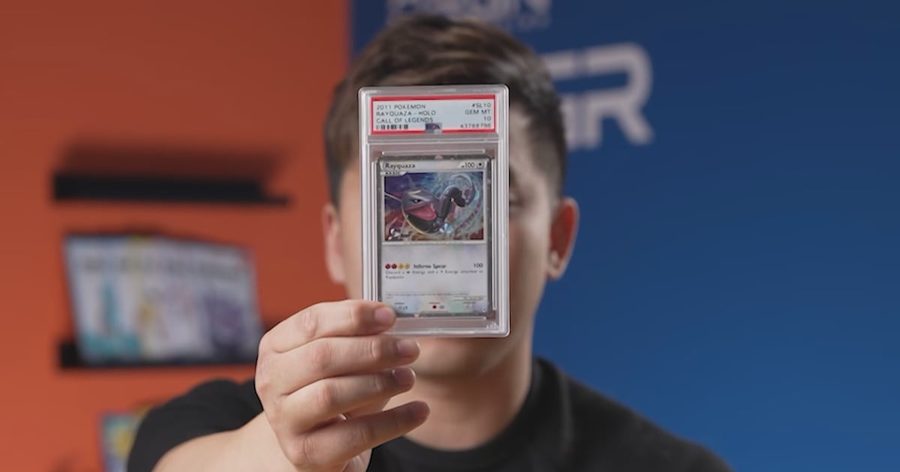
The $42,028 is Ilowitz's own cumulative figure for the 21 cards. MetNews names two of them. One is a 2004 card of Kobe Bryant, the Lakers Hall of Famer, which Ilowitz values at $8,500. The other is a 2009 Pokémon card, showing what MetNews calls "a dragon-like monster," with an estimated worth of $8,250. Together the pair account for $16,750 of the claimed total.
The card pictured at the top of this page is not one of Ilowitz's. MetNews ran it to illustrate the story: a 2004 Kobe Bryant card that, according to MetNews, was offered on eBay for $9,999.99 or best offer.
Why He Wants the Cards, Not the Money
Rosenbaum's case for a court order rests on what a graded card is. "The Cards are unique: each is a specific, serially certified specimen whose grade, certification number and limited print run cannot be duplicated, and several have few or no comparable recorded sales," he wrote.
Money damages cannot adequately compensate Ilowitz if the cards are destroyed, the complaint argues, "particularly where UPS contends that its liability for loss is limited to $100 per package." Without an order, it says, "UPS's stated policy and its representatives' statements make the destruction, salvage or dispersal of the Cards probable before this action can be adjudicated."
The suit asks for the cards back or, if that is impossible, $42,028 in damages. If the cards still exist, it asks the court to bar UPS from "disposing of, destroying, selling, salvaging, auctioning, opening (other than the outer carton for identification), altering, transferring, concealing or releasing" them to anyone other than Ilowitz or his designee.
The $100 Figure
Analysis: The complaint sets two numbers side by side: $42,028 for the cards as their owner values them, and $100 per package as the limit the complaint says UPS is claiming. The destination was a grading company's vault, but on the complaint's account the parcel moved like any other package, and the gap between those two numbers is why the suit asks first for the cards themselves.
Analysis: The complaint's argument also turns the features collectors pay for into a legal point. A grade and a certification number are what make one slabbed copy different from another, and here they are the basis for saying no amount of money is an adequate substitute. Cards in transit have been in the news here before: CASE #0387 covered the burglary of a FedEx truck carrying graded cards back from PSA in October.
Confidence note: The filing date, court, case number, parties, counsel, shipment details, the sequence of statements attributed to UPS representatives, the quoted passages of the complaint, the $100-per-package contention as the complaint characterizes it, the card values and the relief sought are from the Metropolitan News-Enterprise (Nov. 13, 2026, page 3), reporting on the complaint. All statements about UPS's conduct are the plaintiff's allegations. Passages labeled Analysis are the blog's interpretation. Image: MetNews, an illustrative eBay listing, not one of the plaintiff's cards.