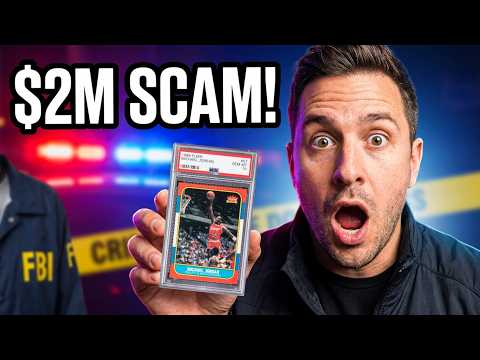
The $2 Million Fake PSA Slab Operation — What the FBI Case Actually Proved — Video of the Day
Federal prosecutors dismantled a $2 million fake-PSA-slab operation — and Sports Cards EDGE walks through what the case actually proved in a way that doubles as a buyer-protection guide. If you have ever bought a graded card online, this is well worth your time.
The underlying case is real and fully documented. Anthony Curcio, 45, of Redmond, Washington, was convicted by a federal jury in January 2026 of conspiracy to commit wire fraud and wire fraud, following a two-and-a-half-week trial in the Southern District of New York before U.S. District Judge Ronnie Abrams. The scheme ran from at least 2022 through May 2024, and prosecutors said it sought to deprive buyers of more than $2 million by misrepresenting the condition and authenticity of sports and Pokémon trading cards sold to collectors nationwide.
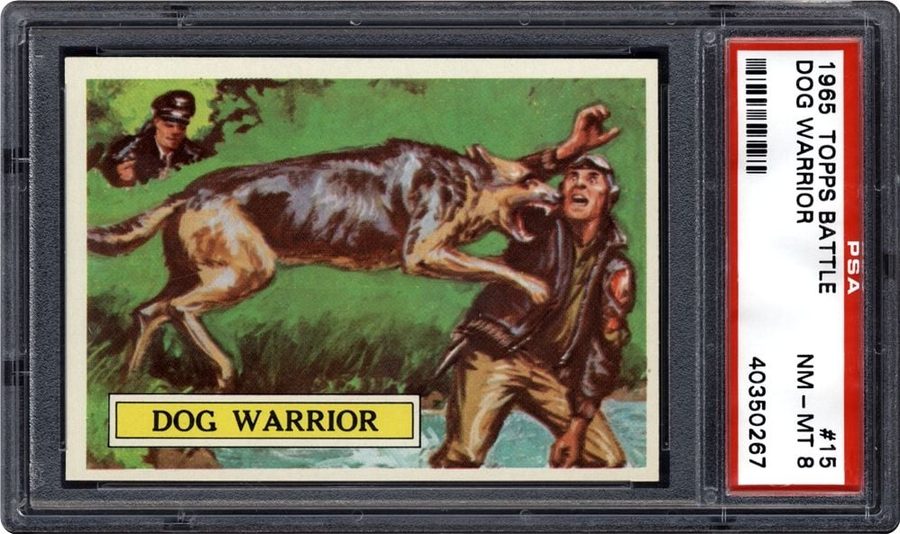
The method is the part every collector should memorize. Curcio and his co-conspirator, Iosif Bondarchuk of Lake Stevens, Washington, who pleaded guilty to one count each, didn't just slap fake labels on cards. They started with genuine PSA labels — the real, tamper-resistant holders with real certification numbers — and altered them: removing or cleaning off the original grade and serial number, then printing counterfeit labels showing elite grades of nine or ten with fabricated certification numbers. A genuine slab, a forged label, a number that checks out nowhere. Cards priced from thousands to hundreds of thousands of dollars were, in truth, worth only a small fraction of what buyers paid.
That is why the case matters beyond the defendants. The entire graded-card market rests on the assumption that the number on the label matches the card inside — and that the label itself is real. Curcio's operation attacked the second assumption: the slab was authentic, the label was not. It is a reminder that the certification number on a PSA label should be verified against PSA's public database before money changes hands, and that a card offered at a price that seems too good to be true is worth a second look even when the holder looks legitimate.
The video covers the FBI investigation, the trial, and what the verdict means for the hobby — and it explains the fraud in enough detail to be genuinely useful to anyone buying graded cards, whether sports or Pokémon.
The verdict: this is one of the most useful buyer-protection videos we have featured — a real federal case, a real conviction, and a fraud method every graded-card buyer should know how to check.
Channel: Sports Cards EDGE