Video of the Day: Are Sports Cards Becoming Too Automated? The Efficiency vs. Soul Debate
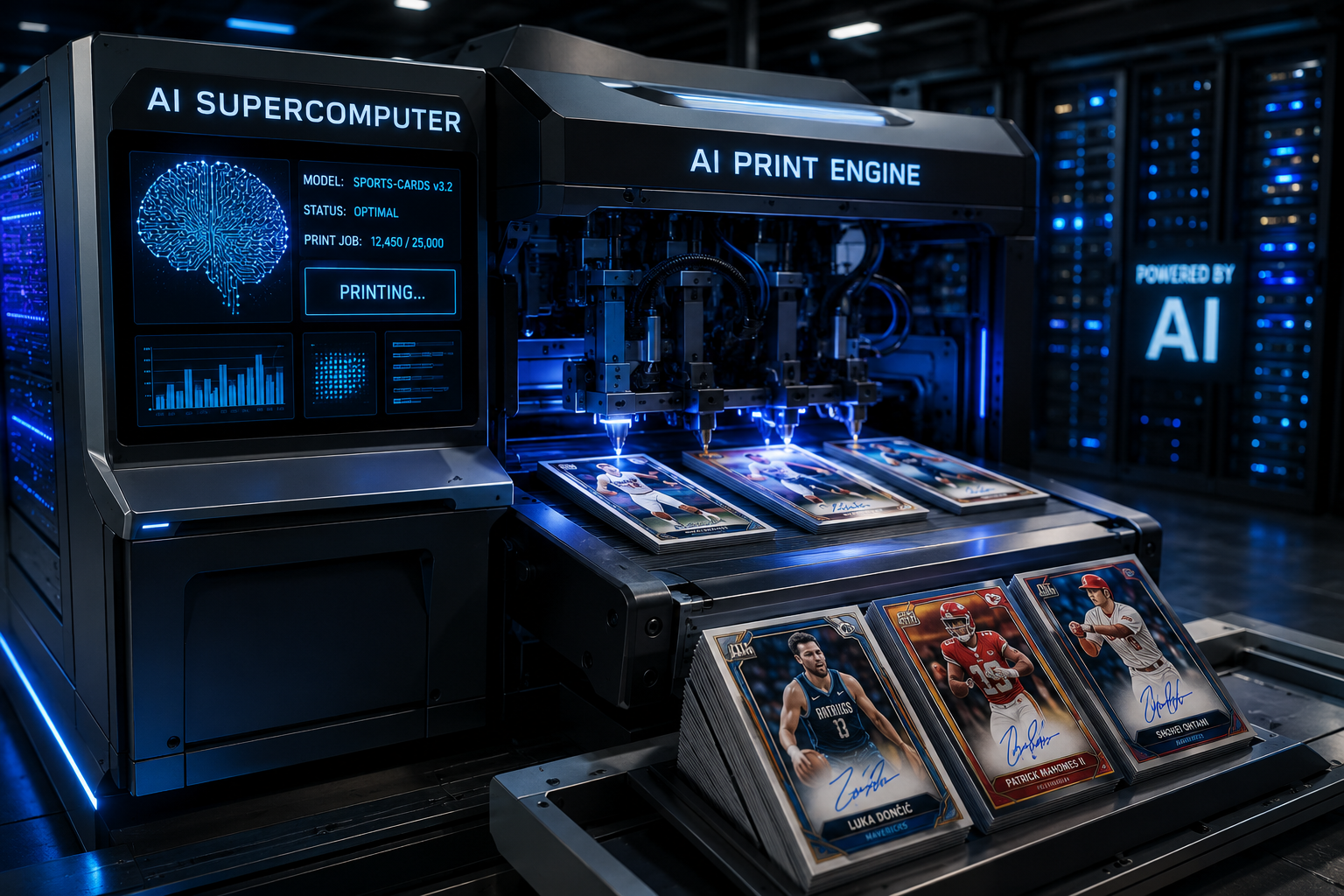
AI grading. Algorithmic pricing. Auction-sniping bots. Automated card scanning rigs. The sports card hobby — built for decades on the romance of the hand-sorted wax pack and the card show handshake deal — is being quietly automated at every level. The Wax Museum Podcast takes on the question that's hovering over the entire industry: are we gaining efficiency, or losing something essential?
The automation trend isn't speculative. It's already here. TAG Grading uses computer vision to assess centering, corners, edges, and surface — no human subjectivity. eBay auctions are dominated by sniper bots that place bids in the final milliseconds. Pricing algorithms on platforms like Card Ladder and Market Movers have replaced the old Beckett price guide as the de facto arbiter of value. And high-volume breakers now use automated sorting rigs that can process thousands of cards per hour.
The Wax Museum crew frames this as a tension between two visions of the hobby. Version one: cards as financial instruments, where speed, precision, and data-driven decision-making are competitive advantages. Version two: cards as culture, where the imperfections — the overgraded card you overpaid for at a show, the raw card you pulled from a pack as a kid — are the whole point.
The uncomfortable truth is that both versions coexist, and they're increasingly incompatible. When AI grading can measure centering to the micron, the old PSA standard of "the grader had a bad day" becomes obsolete. When bots snipe every auction, the casual collector placing a manual bid at dinner gets priced out. The efficiency is real. So is the alienation.
This isn't just a hobby philosophy debate. It has real market implications. If AI grading becomes the standard, the existing PSA population — billions of dollars in slabbed cards — faces an authenticity crisis. If every slab is potentially "off" by half a grade compared to what a computer would assign, the trust premium that props up the entire graded card market gets shaky.
The video doesn't offer easy answers, and that's the point. The automation of the hobby isn't coming — it's here. The question is what we do about it.
Verdict: Automation in the sports card hobby is neither inherently good nor bad — it's a force that amplifies whatever the hobby already is. If the hobby is a financial marketplace, automation makes it more efficient. If the hobby is a community built on shared passion, automation risks eroding what makes it feel human. The warning signs are there. Worth watching before you dismiss this as a fringe concern.
Channel: Wax Museum Podcast